Clearing Orbit.
Non-contact satellite disposal using ion beam technology. No collision risk. Any target.
How it works54,000 debris objects in orbit.
Growing every year.
The Space Development Agency is deploying 500 to 800 satellites in the PWSA. Each has a five-year design life. At steady state, 30 to 50 satellites per year will require disposal.
The FCC now mandates all LEO satellites deorbit within five years of mission end. Satellites that cannot dispose of themselves must be removed by external means.
Every funded approach to date uses physical contact.
Ion Beam Deorbit
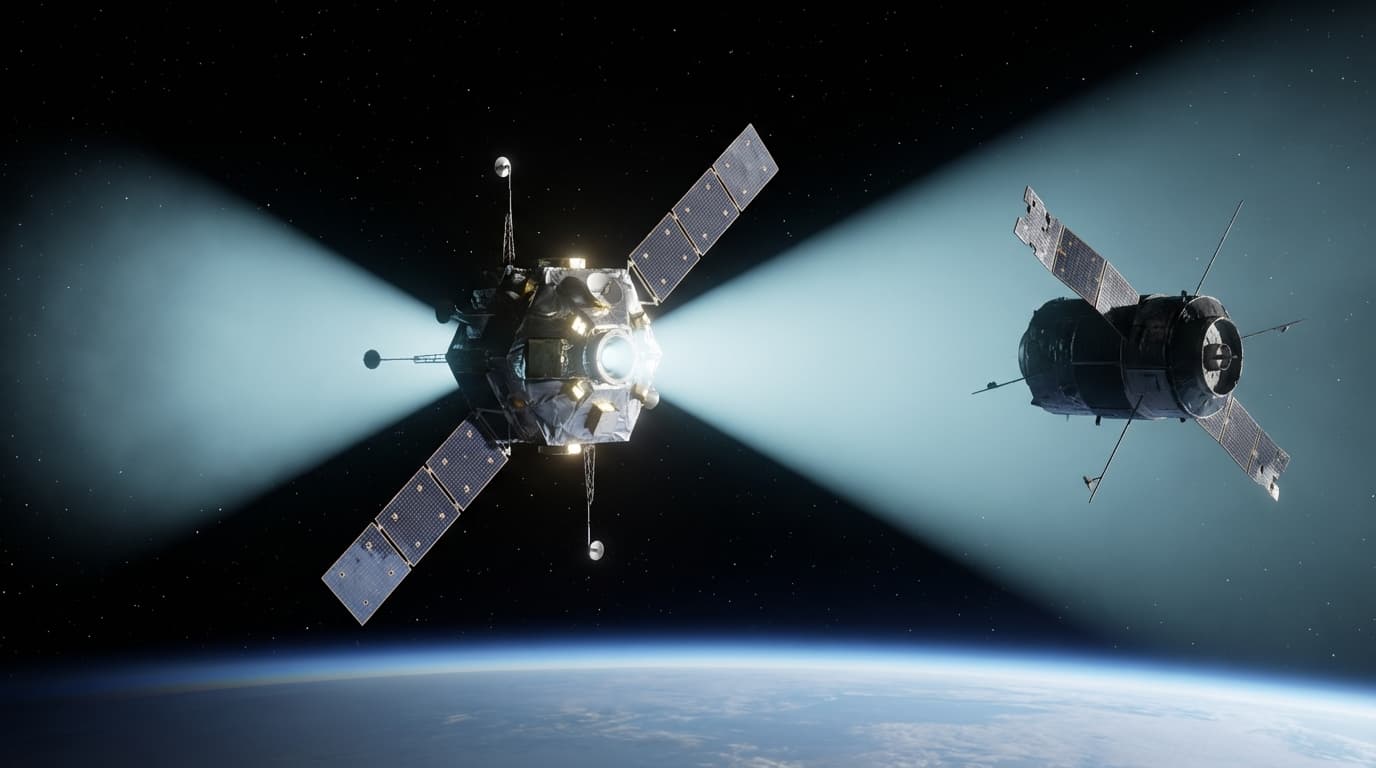
A servicer spacecraft directs a collimated ion beam at a target, transferring momentum without physical contact.
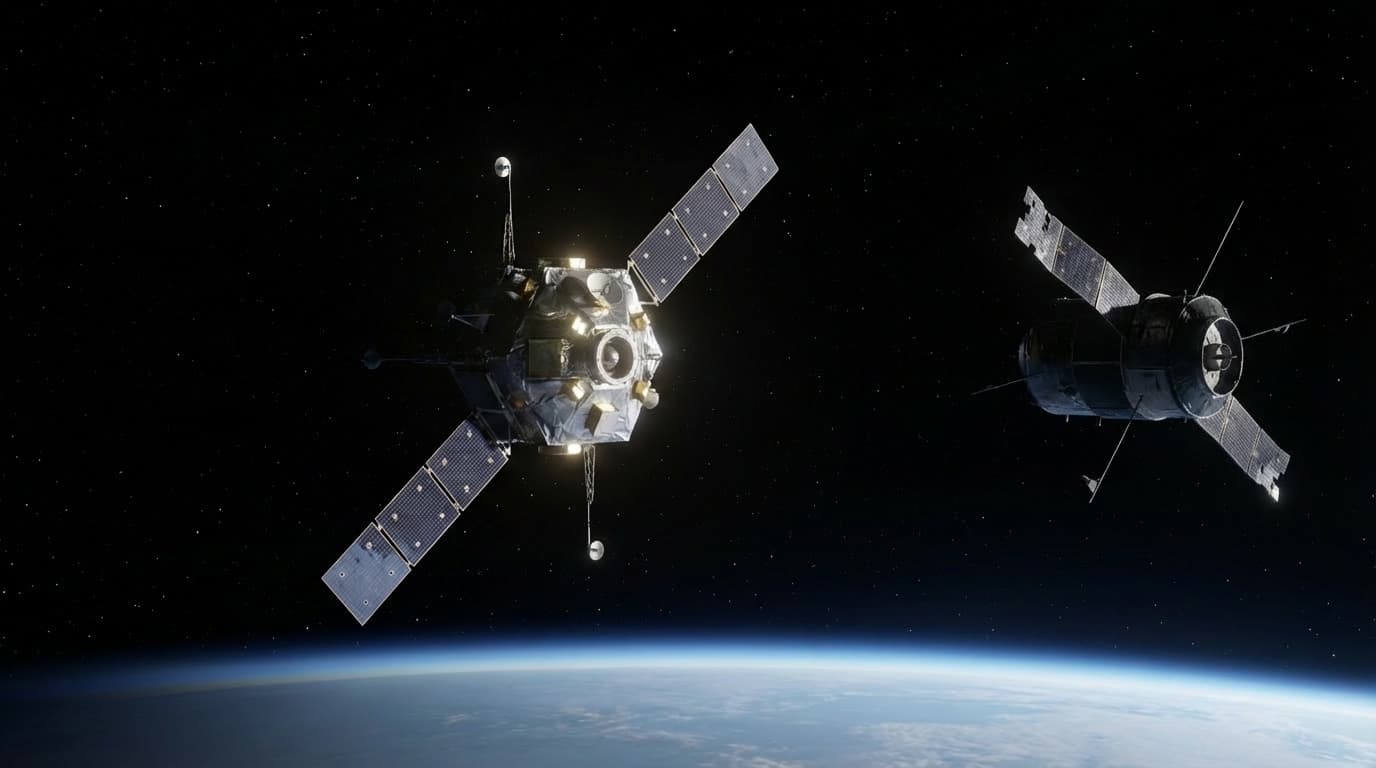
Rendezvous
The servicer approaches a failed satellite and establishes formation flight at 10 to 15 meters standoff.
Beam
The servicer directs a collimated plasma beam at the target, transferring momentum without contact. A compensation thruster on the opposite side maintains formation.
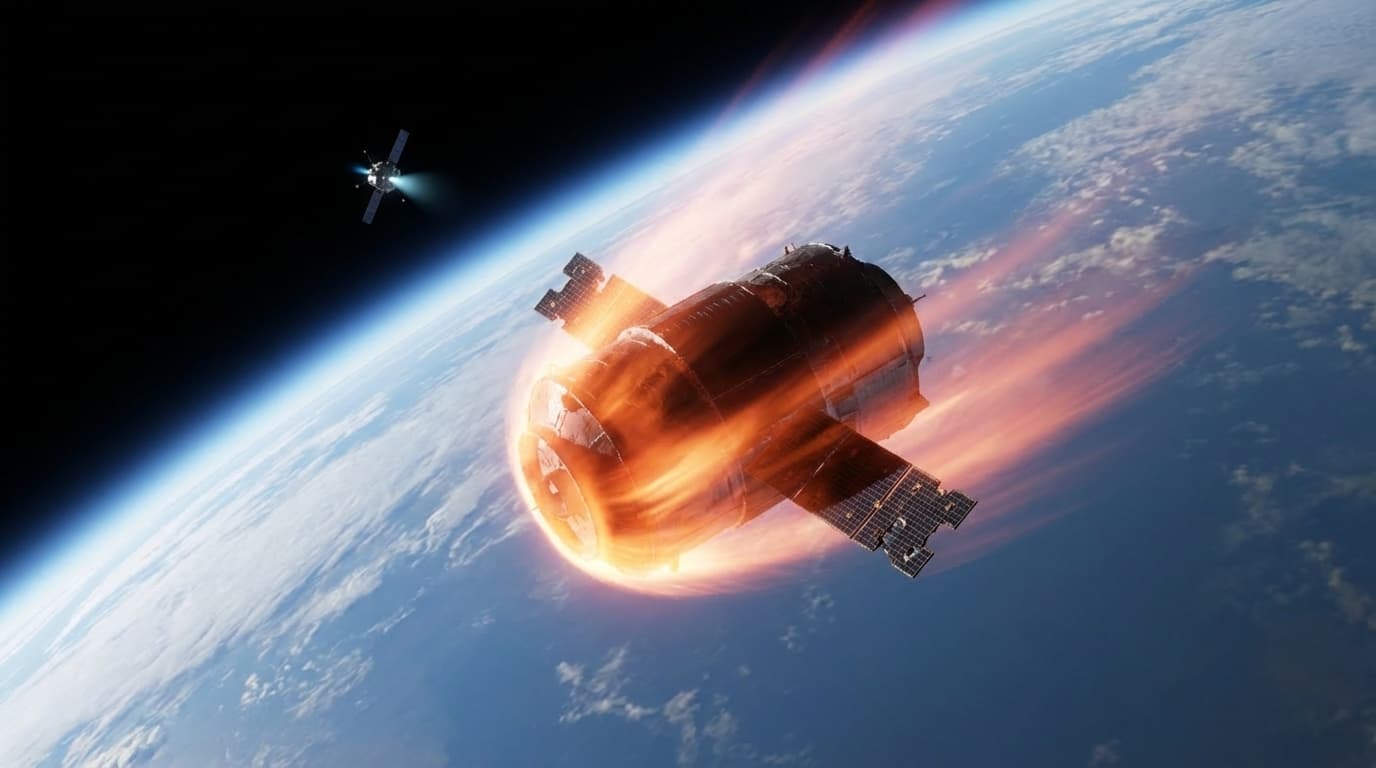
Deorbit
Continuous application lowers the target orbit over weeks until atmospheric drag takes over. The servicer moves to the next target.
Contact vs. Non-Contact
The safest way to clear orbit.
Any target state
Tumbling, damaged, uncooperative. The ion beam transfers momentum regardless of orientation. No cooperation from the target is needed.
Zero collision risk
The servicer never touches the target. 10 to 15 meter standoff maintained throughout. No possibility of generating new debris.
Bus-agnostic
Works on any satellite regardless of vendor or configuration. No target-specific hardware, docking interfaces, or pre-installed fixtures.
Multi-target economics
A single servicer executes multiple disposal campaigns. No mission-specific hardware changes between targets. Each deorbit costs less than the last.
De-orbit as a service is here.
SDA has moved from study to execution on commercial satellite disposal. Six vendor study awards in 2024. The first operational DaaS contract awarded in January 2026.
Every funded approach uses physical contact. Non-contact remains an open lane.
annual addressable PWSA disposal market at steady state
PWSA satellites requiring end-of-life disposal
FCC-mandated maximum deorbit timeline for LEO
First US company pursuing Ion Beam Shepherd ground validation. All prior IBS research is European. No entity worldwide has conducted plume-target coupling experiments with flight-representative hardware.
Team
Andrew Lee
Business & Regulatory
Julius Hutchings
Propulsion
Richard Polignone
Test Engineering